Kansas City Unmatched: How America’s Heartland stood out during the biggest World Cup ever
KANSAS CITY, Mo. (KCTV) - Every city has a story. Written in the land and carried by the culture, Kansas City’s, which came together at the confluence of the Missouri and Kansas rivers, is one of a cow town that grew to be a championship town in America’s Heartland.
Four summers ago, FIFA announced which 16 cities would host games during the first edition of a 48-team FIFA World Cup. As Kansas City does, the self-proclaimed “Soccer Capital of the United States” hosted a watch party. No games were played, but the thought of hosting future games was enough to bring hopeful soccer enthusiasts to the Power & Light District in anticipation.
A shared bid between the United States, Mexico and Canada put games in two cities north of the border and three cities south of it, as well as some of the largest metropolitan areas of the U.S. As cities like Boston, New York, Los Angeles, Dallas and Miami were named hosts, eventually Kansas City heard its name called.
“A little bit of a pinch me moment,” Kansas City Sports Commission CEO Kathy Nelson said after the City of Fountains was selected to host. “We had confidence in it, but until we saw it with everybody else we had no idea.”
Kansas City celebrated on June 16, 2022. A party ensued with city leaders and soccer lovers in attendance. But not the party. That would come later.
The Greatest of All Time
Months after Kansas City found out it would welcome the world in 2026, its most famous guest had some unfinished business to complete. In an unusually timed World Cup, Argentina and star midfielder Lionel Messi captured an elusive title in Qatar in mid-December of 2022, defeating France in a penalty shootout. The win finally got the best player in the world the national team trophy his career had been so desperately craving.
Inside the Kennedy Center in Washington, D.C., the defending World Cup champions awaited their fate on Dec. 5, 2025. That day, the 2022 tournament winners were placed into Group J -- along with Algeria, Austria and Jordan, and scheduled to play their opening match in Kansas City.
“Very hot,” said Argentina coach Lionel Scaloni when asked his thoughts on playing in Kansas City. “With heat, as we know, the game of soccer changes plenty.”
Kansas City’s heat didn’t scare Argentina away. In fact, the Argentine Football Association decided to embrace Kansas City and set up its base camp in town, labeling it “the ideal place to face the competition” with each of its group stage matches in the central time zone and a chance to play a quarterfinal in Kansas City.
When La Albiceleste arrived in Kansas City at the end of May, they did so on a special jet with jersey-inspired designs and Messi’s iconic No. 10 on its tail. As the team arrived at the Origin Hotel, fans gathered outside looking for just a glimpse of anyone associated with greatness.
“Football in Argentina is a religion; it’s not even a sport,” said Dulcinea Herrera, an Argentina fan and co-founder of Cafe Corazon in Kansas City. “People absolutely love it, and because Messi is one of the best of all time, everybody just loves him. He doesn’t mess up. He’s good at everything. He’s fast. He’s smart. He’s technical. At the games, people praise him when he scores.”
Those sought-after glimpses continued on Kansas City’s first matchday, June 16.
On one corner outside the team’s hotel, a 90-year-old man donning an Argentina hat and Messi jersey with a World Cup patch lounged in a lawn chair with a sign. “Messi, my last wish. One photo. I’m 90 years old,” the sign read in Spanish.
On another corner stood Kayla Bustillo, a fan from Colorado who drove her husband and four kids to Kansas City for Argentina’s first match despite not having tickets.
“We worship him. We love Messi,” said Bustillo.
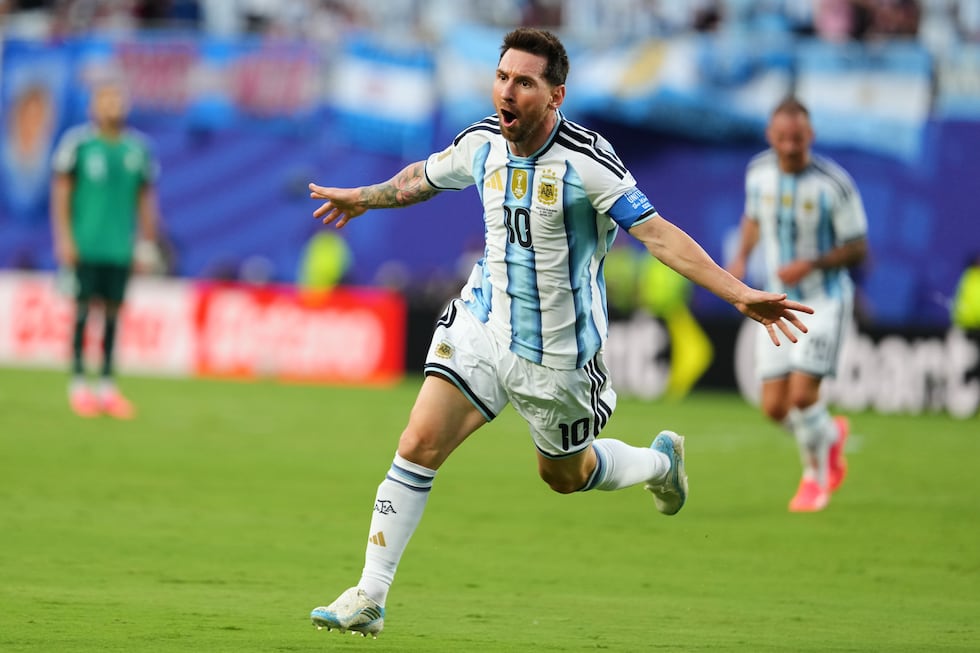
Just being close to what many consider the greatest soccer player of all time was enough for Bustillo, her soccer-loving husband and four kids.
“We’ll try to see if we can see Messi or anybody,” she said. “At this point, anybody from the team is very valuable. Being so close is nerve-wracking.”
Inside the FIFA Fan Festival on the grounds of the National World War I Museum and Memorial, sky blue Argentina jerseys -- including the six worn by Bustillo and her family -- were the majority outfit. The vast majority of those kits included a No. 10 Messi on the back.
Attendees at Fan Fest and the sold-out crowd of just under 70,000 in attendance at Kansas City Stadium, better known to locals as Arrowhead Stadium, weren’t disappointed in Argentina’s group stage opener. Despite an early score of his being called back due to an offside call, Messi found the net with goals in the 17th, 60th and 76th minute to lead his squad to a 3-0 victory over Algeria and tie the tournament’s all-time scoring record in the process. Argentina’s title defense was underway, and so too was the party in Kansas City.
Rock Chalk Algeria
Just down the road in Lawrence, Kansas, a college town was building a bond with a North African nation.
Algeria, a nation with 47 million people, was placed in Group J along with Argentina and assigned multiple group stage matches at Kansas City Stadium. As such, the Algerian contingent settled on the University of Kansas’ Rock Chalk Park for their training grounds and the DoubleTree hotel for the team’s lodging.
That choice led to an unexpected bond between Algeria and a college town in the middle of America.
“The thing I love so much about the game of soccer is, when you strip away all of the problems, it is the one thing that seems to unite the world,” said Nate Bukaty, a soccer broadcaster and author of Perfect Pitch: How Kanas City Became the Heart of American Soccer. “That’s been the number one story of the World Cup to this point is how the Algerian federation, the players and their fans have been embraced by the city of Lawrence.”
In Lawrence, the Algerians did as the locals do. Before practicing at Rock Chalk Park, the Algerian team visited KU’s other athletic facilities, including the cathedral of college basketball, Allen Fieldhouse.
“We’re making good friends across the world,” said Lawrence resident Lori Underwood. “It’s been great. An amazing, unexpected experience.”
“I was happy myself because I go to KU and I’m also Algerian,” said Sajedah Andalsi. “So it’s kind of like my two worlds colliding.”
At Amyx barbershop, the usual local visitors were joined by some World Cup guests during the festivities.
“We got to cut a couple of the Algerian players hair when they first moved into town,” said Malcolm Miller.
Across the street from the barbershop on Mass Street, Lawrence residents stopped in at ACME Hot & Fresh T-Shirts, where hundreds of screen-printed shirts donned custom designs, unifying the town with its guests.
“It’s just so on brand with Lawrence,” said resident Mollie McAuley. “Because the people here, the way they treat each other, the camaraderie, the kindness, it’s just that’s Lawrence. Everybody’s just giddy.”
“I got one of those Algeria flag heart KC t-shirts,” says Bukaty. “I had multiple Algerian fans come up to me and say they liked the shirt, and I started talking to them about their experience here, and they became emotional talking about how well they’ve been received. And I asked them why that made them so emotional, and they said because it’s not what they expected.”
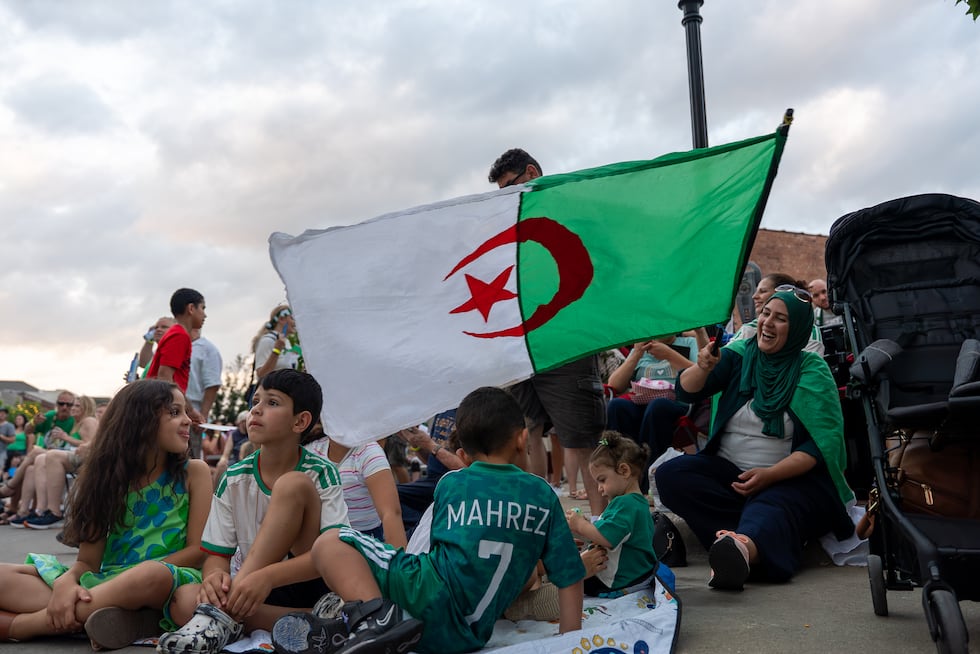
Bukaty continued: “They thought they were going to find a country that was mistrustful of visitors, that was unwelcoming of foreigners, and maybe particularly in the middle of America.
“And what they found has been the exact opposite.”
After dealing with the tactical trouble that was defending Lionel Messi in their tournament opener, the Algerians bounced back with a 2-1 victory over Jordan in San Francisco. That set the stage for their group stage finale, which featured decades of history.
Because of the tournament’s expansion to 48 teams, the 2026 group stage would send 32 teams to the knockout round, with the top two teams in all 12 groups and the eight best third-place teams advancing. With Argentina securing the group stage victory through Group J’s first two matches, Algeria and Austria would play in Kansas City on Saturday, June 27, knowing exactly what scenario would advance the teams to the Round of 32.
In 1982, West Germany and Austria played a game that went on to be known as the “Disgrace of Gijon.” Both teams went into the match knowing a German victory by only one or two goals would advance both teams to the knockout stage and eliminate Algeria from the World Cup.
A West Germany goal in the 10th minute of the match gave them the lead they needed, and set the stage for the game’s final result -- which left Algerians stewing even 44 years later. The final shot attempt on goal came in the 54th minute, both teams completed over 90% of their passes, and the game saw fewer than half the number of shots (13) as the average during that year’s World Cup tournament (30).
“We need to get our revenge on Austria,” said Faris Benremouga, a young Algerian-American citizen whose parents educated him on the ins and outs of the history. “They got us eliminated in the 1982 World Cup wrongly.”
But revenge, according to Benremouga, didn’t necessarily mean a victory for the Algerians. After all, they knew going into the match a tie in Kansas City would net them a matchup with Group B winner Switzerland, instead of Group H winner and tournament favorite Spain.
“I don’t want to win,” he said. “I want to tie. Because then they’re going to get eliminated playing Spain.”
Behind the goal in the northeast end of Kansas City Stadium, Algerian fans featured a banner that read “Thank You, Lawrence!” as their team played its group stage finale. By the time their team left the Kansas town, their players left a symbol of their appreciation.
“They were wearing our t-shirts, they were holding our flags and singing with us,” said Louiza Cherfi, a local Algerian organizer. “This is showing them the appreciation and thanking them back for what they did.”
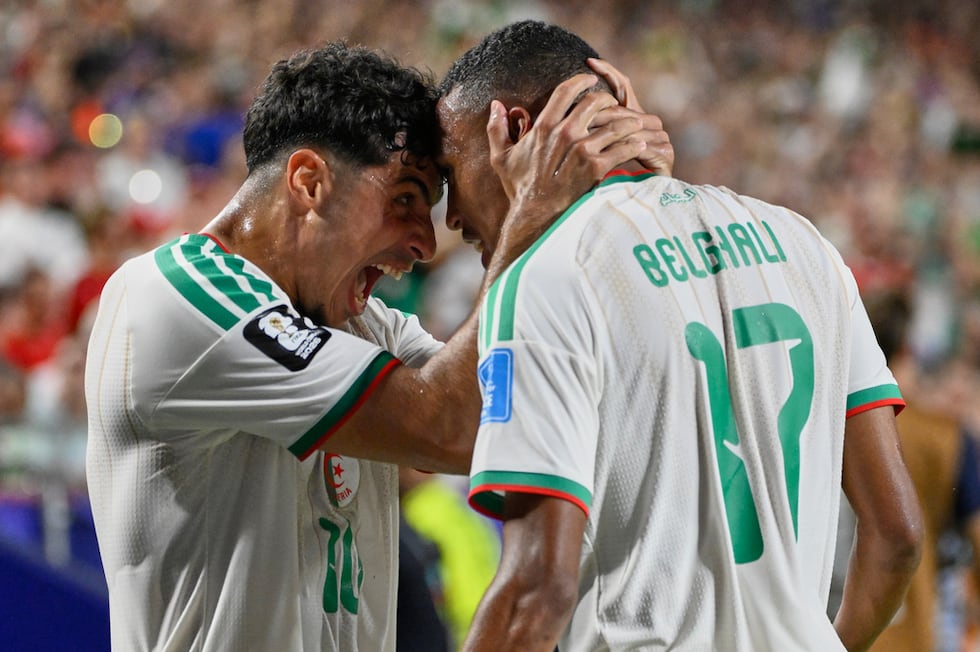
An Austrian goal in the 28th minute from Marko Arnautovic threatened Algeria with elimination, and turned up the game’s pace. By the 60th minute, Algerian star Riyad Mahrez knotted the match at 2-2 with an equalizer.
By the final moments of the second half, it appeared the Desert Warriors of Algeria would be content with a draw. Then, Algerian captain Riyad Mahrez took an opportunity and scored a go-ahead goal in the third minute of stoppage time to put Algeria ahead 3-2. A frantic Austrian team suddenly on the verge of elimination answered with a last-ditch effort that ended with a goal, headed home by Sasa Kalajdzic in the sixth minute of stoppage time.
As some expected, the Group J finale ended in a tie. But by no means was there a “Disgrace of Kansas City.”
“We’ll Never Miss a Party”
In the fall of 2015, a World Series title for the Kansas City Royals brought a flood of blue downtown, stretching across Grand Boulevard, the lawn of the World War I Museum and Memorial and the front steps of Union Station.
In the winter of 2020, the Kansas City Chiefs made parades a tradition for the football-crazed city and its newfound star quarterback, Patrick Mahomes, hosting the first of three Super Bowl parades with tens of thousands of red and gold wearing supporters taking to the same area after a victory in Super Bowl LIV.
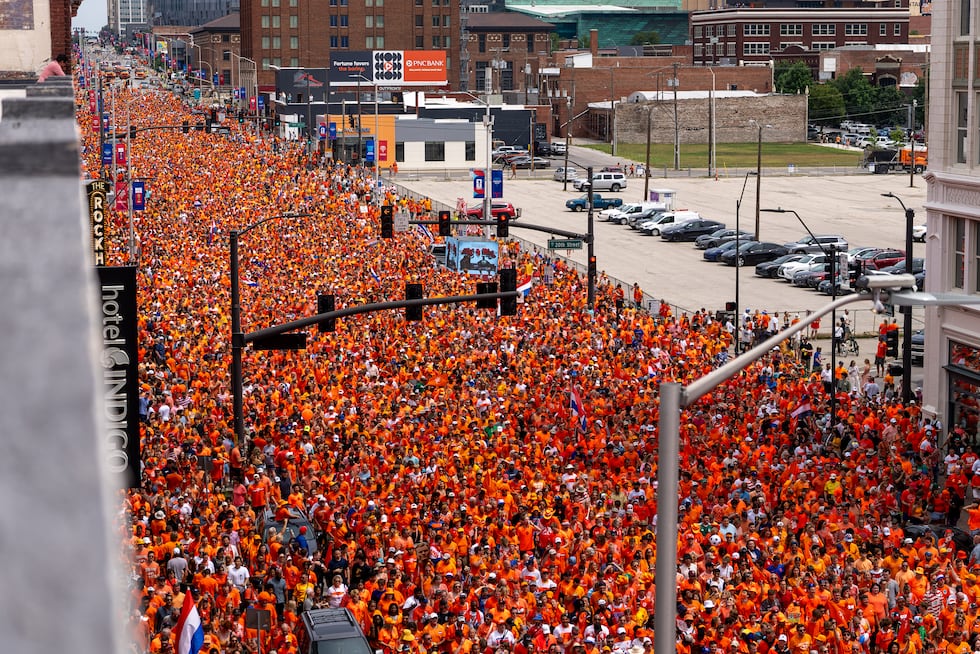
On a summer day in 2026, a different parade and different color overwhelmed Grand Boulevard.
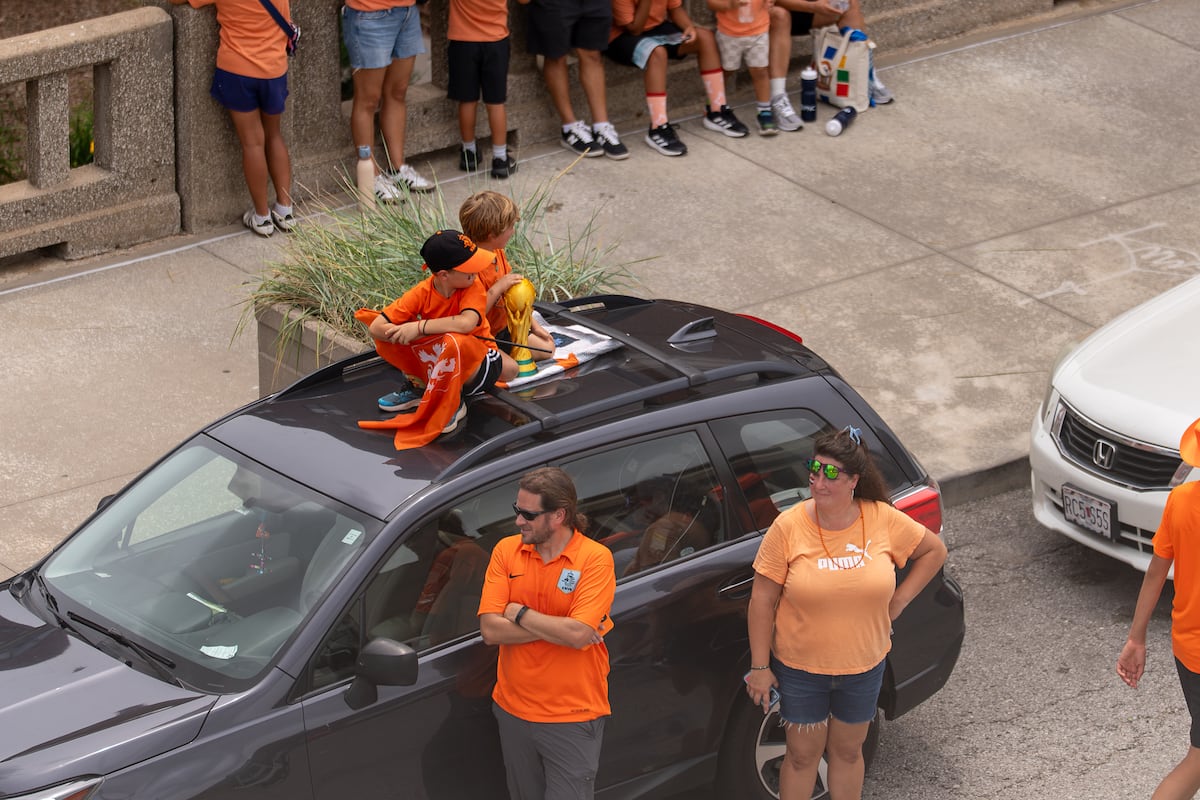
With the Dutch in town for a Group F match against Tunisia, so too was the famous Dutch Orange Bus for their group stage match at Kansas City Stadium.
“This is a once-in-a-lifetime opportunity,” said Tony Jansen, a Californian with Dutch heritage who was in Kansas City for the iconic Oranje Fanwalk and match. “We love soccer.”
“It’s going to be my first time doing actually the walk,” said Julia Vindrlick, a Dutch native who moved to Kansas City recently.
“It gets bigger and bigger and bigger,” said Pedro, a Dutch fan. “It’s like a snowball effect.”
Vindrlick wasn’t the only first-timer participating in the festivities on June 25.
A hot and humid day didn’t deter large crowds from gathering in downtown Kansas City to partake in the festivities. Among the participants in the fan walk was Roberto Lopez Ramirez, a Netherlands fan and Dutch resident from Curaçao, a country within the Dutch Kingdom that also qualified for the 2026 World Cup.
The Oranje Fanwalk in Kansas City was Lopez Ramirez’s 15th or 16th time participating.
“People here talk more about the fan walk than the game by now,” he said. “This is a parade. It’s a party.”
The iconic Dutch left-right song took the internet by storm and created a moment remembered by all in attendance for Kansas City’s walk.
“It’s silly, but it’s a fun silly,” explained Lopez Ramirez.
In total, Kansas City officials estimated 36,000 participants joined in for the iconic celebration.
“That was unbelievable,” said Nathan McVay, a friend of Lopez Ramirez’s and roped in supporter of the Netherlands via his Curaçao fandom. “It’s amazing to me all the people that came to watch. I just thought everyone joined in, but it really looked like a Chiefs or a Royals parade. It was insane.”
As they came down from the euphoria of the parade, McVay asked Lopez Ramirez if the crowd was impressive.
“Absolutely,” Lopez Ramirez said with a boyish grin. “I don’t think it’s been larger than this one. Ever.”
“That’s Kansas City,” McVay said. “We’ll never miss a party or a parade.”
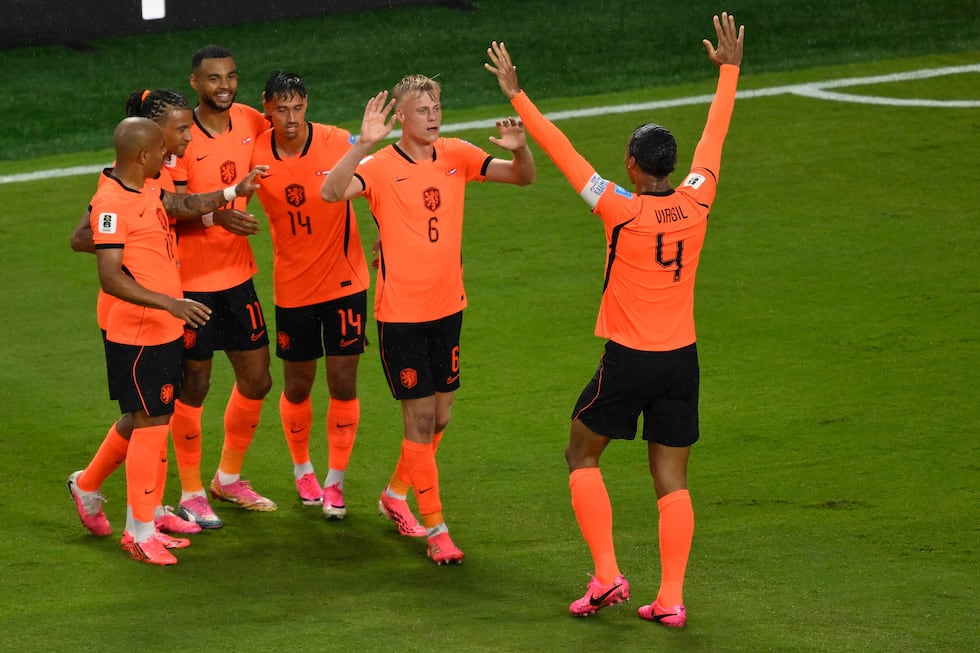
The fan walk was the main event of the day. On the pitch, the Netherlands team -- which set up its base camp in Kansas City and practiced at the KC Current’s facility in Riverside, Missouri -- handled Tunisia in a rain-filled 3-1 victory later that evening to secure first place in Group F.
A Feeling Words Can’t Even Describe
Christian Bosmediano was always going to do whatever necessary to see Ecuador play a game in the 2026 FIFA World Cup. The Kansas City, Missouri, native who grew up playing soccer, “probably started kicking a ball as soon as I started walking,” he says.
Bosmediano, a content creator known online as “Ecuabro,” is 28 years old and has lived in Kansas City for 20 years. Growing up, he spent 8 years living in Ecuador, where his parents were from and extended family remains.
“When they announced that it was coming to Kansas City, I was in Ecuador at the time,” he said. “My best friend from here texted me, ‘Ecuador in Kansas City,’ and I looked it up and I was like, ‘Oh my God, it’s real,’ freaked out and made a video.”
The video, posted to his social media feeds -- which has thousands of followers -- caught an emotional Bosmediano on the verge of joyous tears. The game he grew up loving was coming to the city he calls home.
“I realized people were like, ‘Oh, I don’t know what Ecuador is,’ so I started making videos of what it’s like traveling around Ecuador, what it’s like eating some of the food.”
Bosmediano made the trek to Philadelphia for Ecuador’s World Cup opener on June 14, watching his beloved team come up short in a 1-0 loss to Ivory Coast. Still, the trip showed him the imprint he’d made on Ecuador’s fanbase.
“I was walking around and people would see me, they would recognize me and they would ask for pictures,” Bosmediano said. “Crazy. I never thought people would want to take pictures with me, just strangers, randomly.”
The night before Ecuador took to the pitch in Kansas City, Ecuabro took to the stage at the FIFA Fan Festival to lead the banderazo -- a pre-match gathering to sing, wave flags and support the team in anticipation of the game.
“It felt like we were in Ecuador,” he said. “It didn’t feel like Kansas City anymore. Being on stage at the banderazo and then seeing thousands of Ecuadorians in front of me, I think that’s the biggest thing I’m going to remember is that image and the image of me and my family at the stadium.”
Matchday in Kansas City for Ecuador -- and Ecuabro -- was no different.
In anticipation of Ecuador’s second group stage match, a contest against Curaçao, Bosmediano went to Tacos Valentina for a gathering with Ecuadorian supporters to increase excitement for the game and eat encebollado, an onion-dressed fish stew native to the South American nation.
“I did not expect to see so many Ecuadorians,” Bosmediano said.
After a pre-match FaceTime call with his grandmother and some singing and dancing at his family’s home in the Northland, Bosmediano and his crew were headed to Kansas City Stadium. Along for the ride with his family were several of Bosmediano’s friends. Despite having no blood ties to Ecuador, they too were supporting the team that Saturday in Kansas City.
“Having the Ecuadorians here is bringing back that culture and just see how we are and how fun we are,” he said, tearing up at the thought of his father’s first World Cup game. “It’s just really exciting. It’s just really exciting time that we all get to do this together.”
On the way to the match, the nerves arrived for Bosmediano.
“I’m anxious. I’m emotional,” he admitted.
For years, Bosmediano had gone to Arrowhead Stadium for Kansas City Chiefs games, hearing the “Star-Spangled Banner” play ahead of kickoff. This time, it was the anthem of his family’s homeland playing before the match kicked off.
As “¡Salve, Oh Patria!” -- which translates to “We Salute You, Our Homeland” -- played, an emotional Bosmediano had tears welling in his eyes.
“We’re very proud people of our culture, and so we definitely love singing our national anthem as loud as we can,” Bosmediano told KCTV5. “Tearing up just looking to my right and left that it’s here in Kansas City, that’s probably what made it surreal was singing the national anthem and seeing everybody there.”
For as much as Bosmediano couldn’t believe his nation was playing just miles from his childhood home, Ecuador’s opponents on Saturday, June 20, were perhaps even more remarkable.
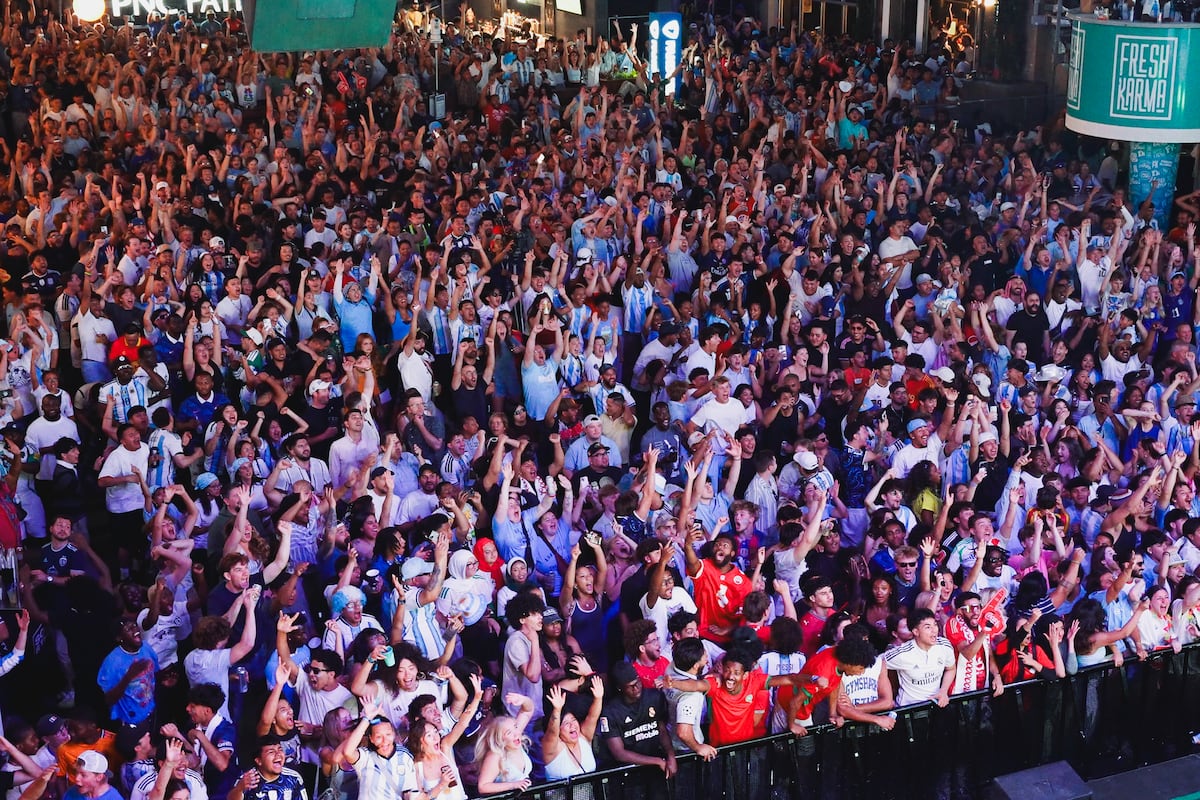
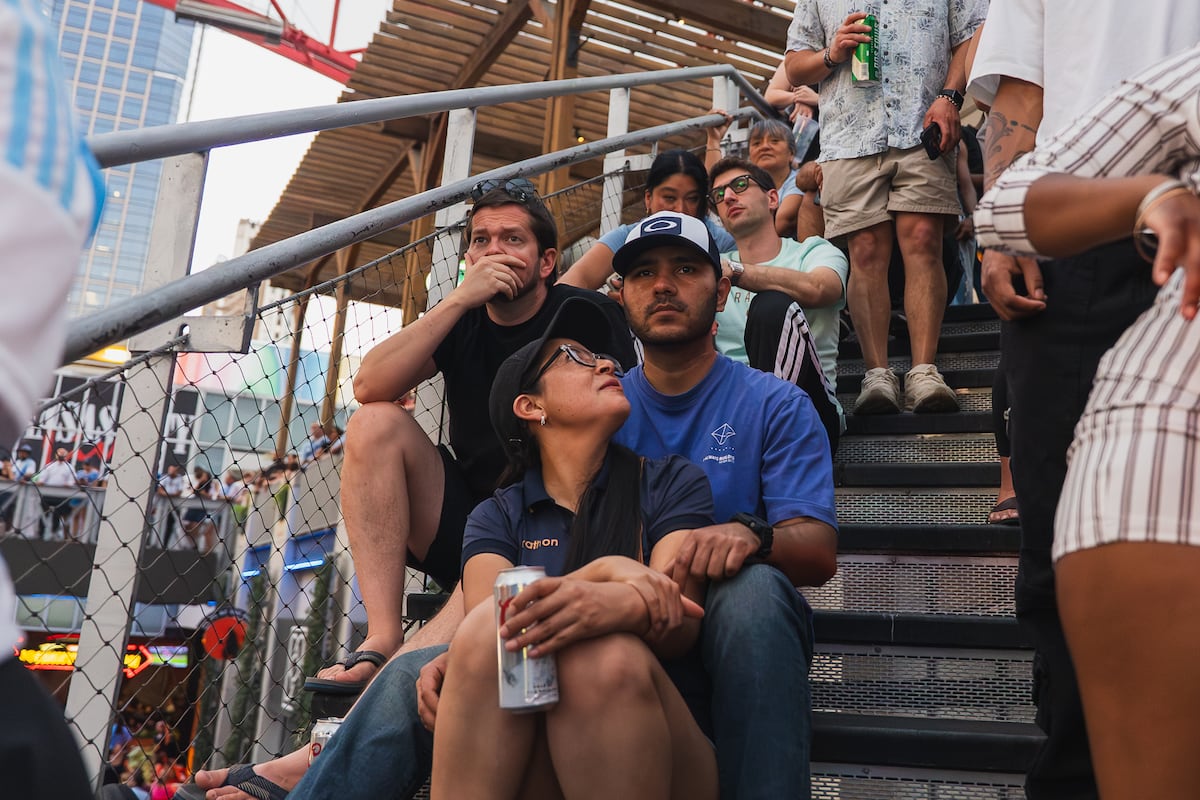
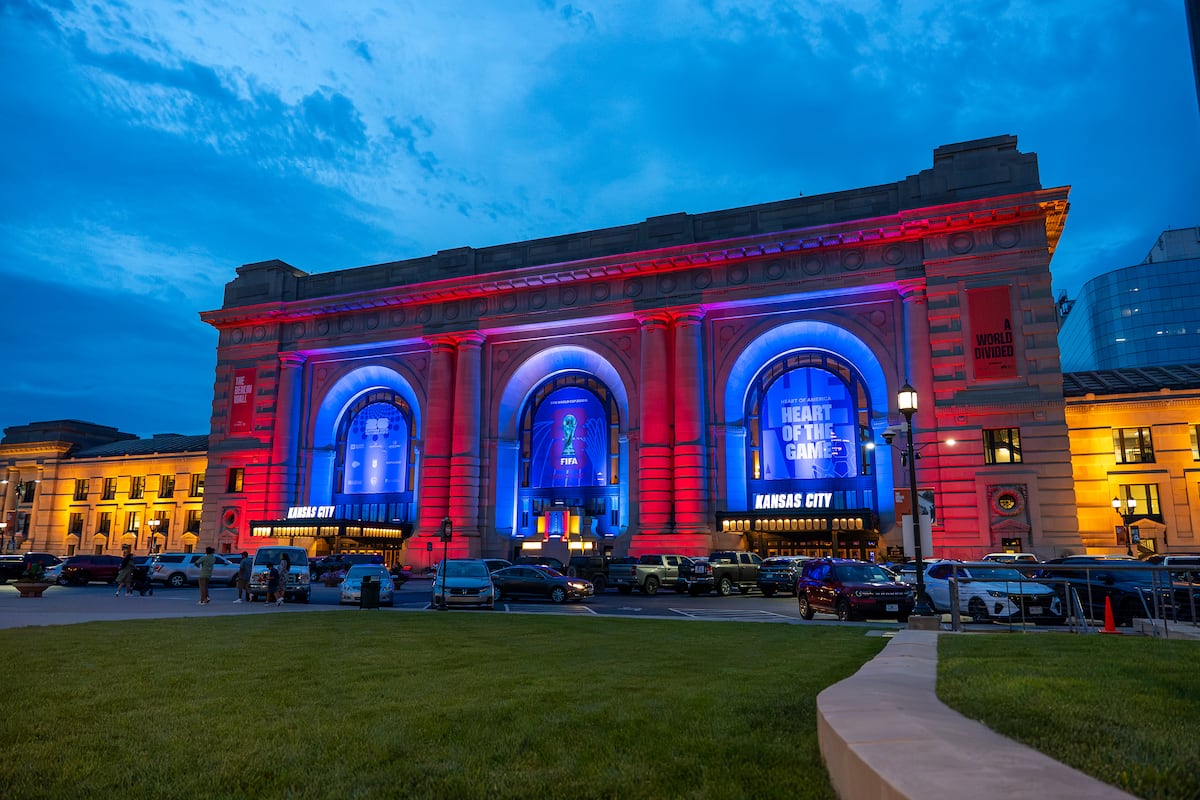
With the tournament’s expansion to 48 teams, Curaçao, a tiny island country in the Caribbean Sea, made the FIFA World Cup for the first time.
“It’s a party, it’s a celebration, it’s a first,” said McVay whose mother and stepfather settled in the island of Curaçao. “Celebrate it. Live in the moment because it’s the first of ever and it’s pretty amazing.”
Curaçao, a nation of just over 150,000 people (roughly the equivalent of Olathe, Kansas) qualified for the World Cup through CONCACAF with a 0-0 draw against Jamaica on Nov. 18, 2025. In doing so, the Blue Wave became the smallest nation ever to qualify for the World Cup.
“We’re like a chihuahua,” said one fan as Curaçaoans arrived at Kansas City International Airport for their Group E match. “It might be small in size but big in heart.”
“I told my brother, this is like our high school playing against the Kansas City Chiefs,” said McVay. “It’s that scale. No one expects to win, but you get to share the field with them. You never thought in a million years they’d be able to participate in a World Cup. The day they announced that the World Cup was coming to the United States, I was like ‘that’s the number one thing on my bucket list. I’m going no matter where it is.’”
McVay entered FIFA’s ticket lottery and gained access to the opportunity to purchase tickets for a game.
“The day comes that Curaçao qualifies and it was the outside thing of like, well they could be in Kansas City, but the chances are miniscule. Then on June 20 it’s Ecuador versus Curaçao and I’m like, ‘No way.’
“It’s the luckiest run of events that have ever happened to me as a sports fan, maybe even in life,” McVay says. “It’s just a full circle thing that I get to cheer them on and they would come here to my home city and in a stadium that I’ve had some of the greatest experiences of my life in. It’s going to be great no matter what happens. It’s truly so incredible that they are here.”
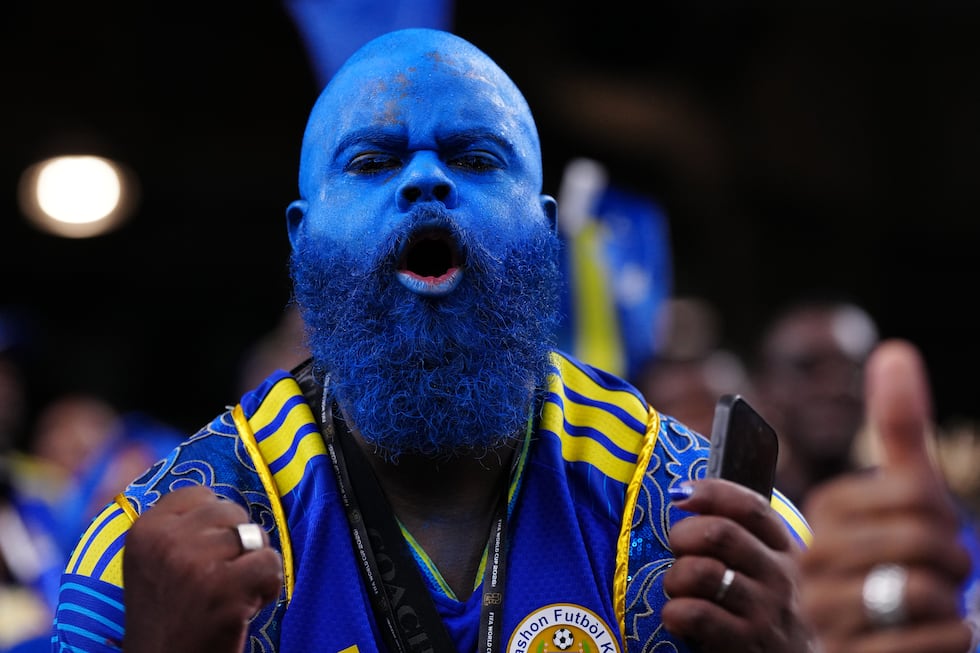
Qualification opened the door for Curaçao super fan Brenton Balentien, aka Captain Blue Face, to get his shot to see his team play on the world’s biggest sporting stage.
“The blue we have on the island represents the beaches, the skies and the possibilities and the vibes and the energy,” Balentien said, standing in front of a mirror inside a Kansas City hotel on matchday. “The reactions through all the game days are crazy. People are going wild. People want to take pictures, they want to take videos, and it’s something unbelievable. I say to myself, ‘What a time to be alive.’”
By day, Balentien is a debt collector in his native Curaçao. By night -- or matchtime -- he becomes Captain Blue Face, the face of soccer fandom for the island nation.
“He worked hard for this,” said Balentien’s wife, Roxchanty Adriën. “It’s his dream. It’s very nice to see how much love he gets from everyone.”
The entire Captain Blue Face procedure is an arduous one. But it didn’t begin that way. Balentien says it started with only stripes under the eye and “a little bit” on the face.
“But later on I said, no, let’s do this. Let’s go crazy and do everything, the whole face and ears and your neck,” Captain Blue Face said. “Everything goes blue. The bluer you get, the more luck it brings.”
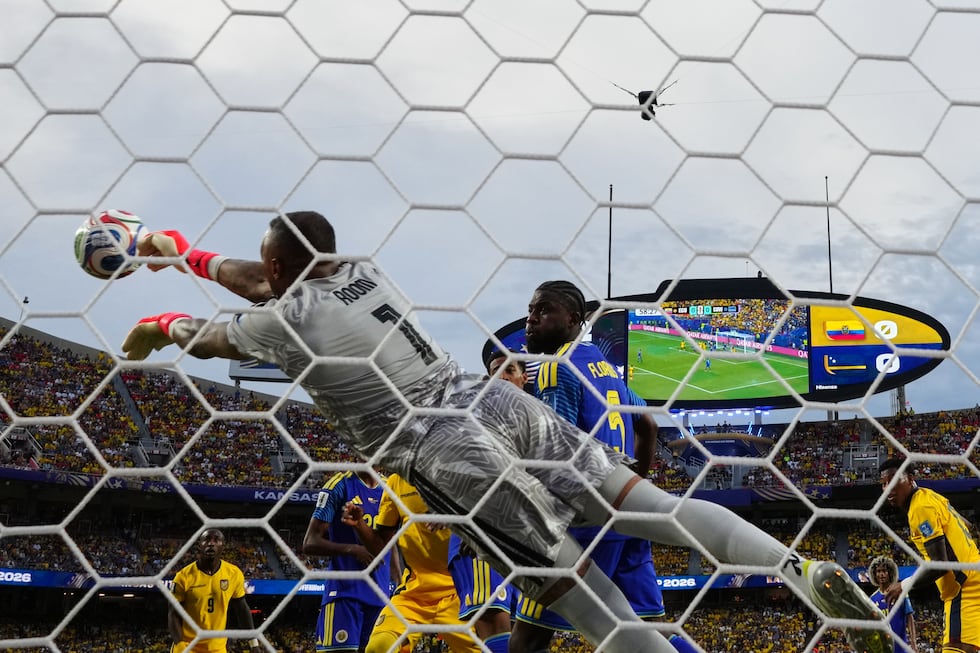
With Balentien’s shining and smiling blue face in attendance, the tiny island that could fought valiantly, leaving Kansas City Stadium that afternoon with a historic scoreless draw, the first World Cup result ever secured for the nation.
“It’s a good year for the island,” Balentien said. “We got the exposure we needed because we live from the tourism and the World Cup has helped us boost the island in such a way that tourists are coming in. The locals have more jobs. So this goes beyond football.”
While Ecuador entered the match as favorites to win and left with no goals, Ecuabro left with no shortage of memories.
“We thought we were going to win,” Bosmediano said. “Even though we tied, we still had an amazing time just being together and celebrating and supporting Ecuador. I did not expect to see so many Ecuadorians and I love how Kansas City showed up.”
You Play Soccer, or You Play Soccer
With group stage matches in Kansas City complete, Colombia and Ghana were matched up as opponents for the fifth match hosted by the city, a Round of 32 match.
A pair of wins and a draw by Colombia helped them win Group K, bringing Orlando Gutierrez’s nation to his hometown.
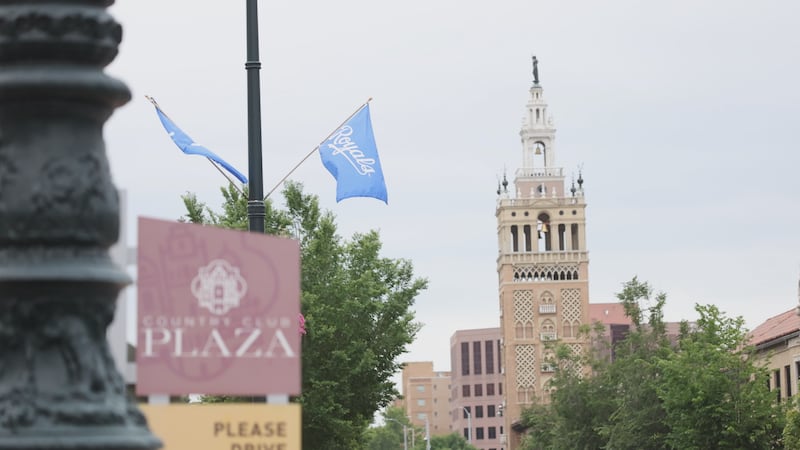
“We’re here to raise the colors of our team,” Gutierrez, the President of the Colombian Cultural Association of Kansas City, said a night before the knockout round action came to Kansas City at a banderazo event near the Country Club Plaza. “We’re coming together as Colombians. This is a once-in-a-lifetime opportunity.”
Colombia’s arrival in Kansas City was a fortunate outcome for John Sosa, a local soccer coach in Lee’s Summit, Missouri, born and raised in the South American nation before moving to the U.S. when he was 14.
“I started coaching when I was 22 years old,” Sosa says. “The game of soccer is part of our culture. In Colombia you don’t have too many sports. So you play soccer or you play soccer, most of the time.”
The banderazo festivities and match night vibe in Kansas City were overwhelming with support for Colombia, which cruised to a 1-0 victory thanks to a goal from Jhon Arias in the 14th minute.
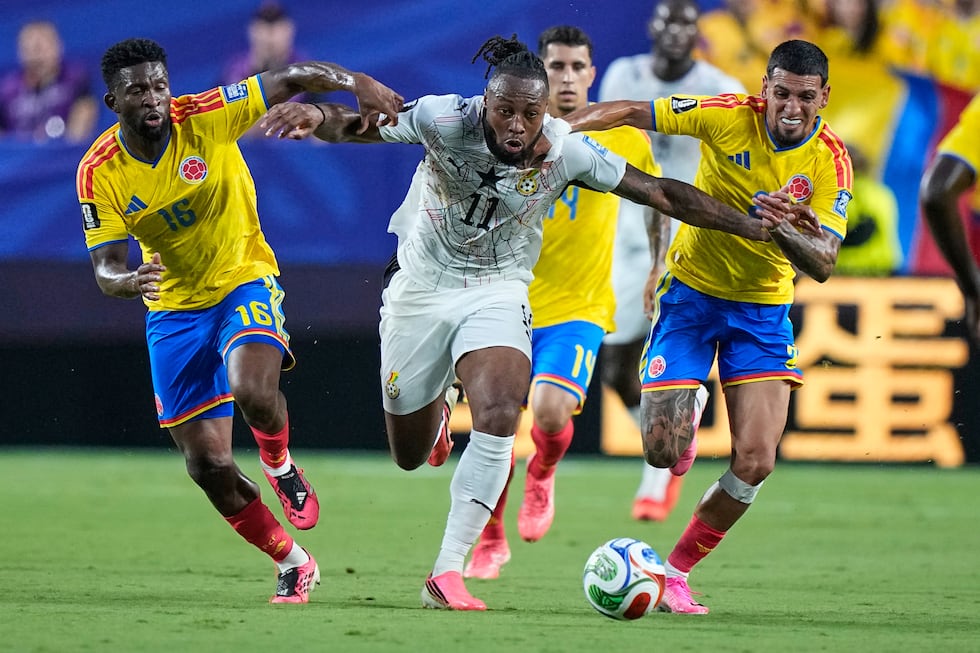
“We pride ourselves on our happiness,” Sosa said. “We’re happy people and we’re people that care and that are friendly, overall. You can see it in some of the festivities. They know how to have fun.”
Whether it be the FIFA Fan Festival, Power & Light or inside the stadium, Colombia had a clear crowd advantage.
“I’m very proud of Kansas City because of that,” Gutierrez said. “They’ve adopted every team that’s come through here whether they have any commonality with it or not. That’s great and that shows we’re an open-minded city, a welcoming city. I’ve always known it, but it shows it.”
After the victory, Colombian supporters gathered outside the team’s hotel near the Plaza late into the night, waiting to welcome them back to the stadium with victorious cheers.
You Feel It Here
Despite being the smallest host city in the 2026 World Cup, Kansas City managed to make an outsized impact on the tournament.
“I think the best thing about it is the wide array of people all coming together,” said one Kansas Citian.
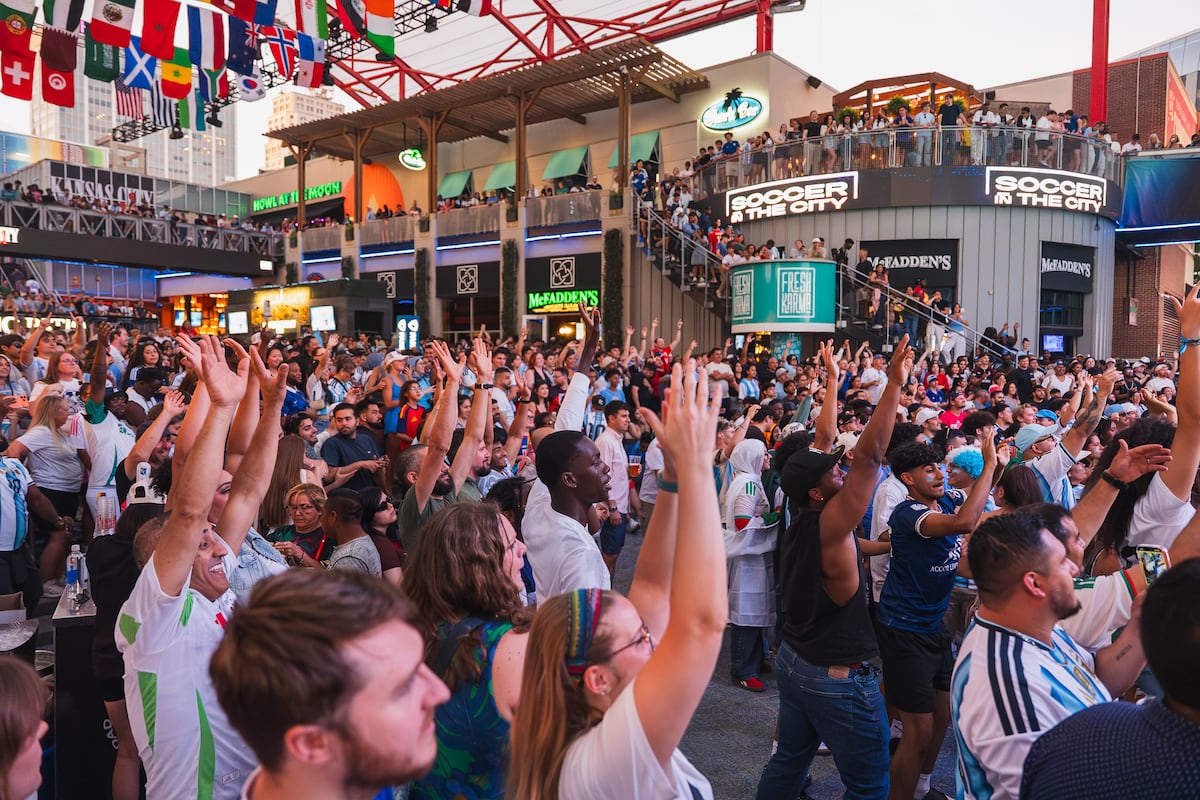
The FIFA Fan Festival hosted out front of the World War I Memorial & Museum saw more than 400,000 attendees show up over the month. Of them, more than 170 countries were represented among registered visitors.
“I’m already a fan of the game, but when you’re watching with other fans of the game I think it definitely enhances the experience,” said Alden Valenzuela. “It’s something unique that I don’t know -- who knows if we’ll ever get this in our lifetime again.”
Watch parties at Fan Fest and downtown at Power & Light were broadcast nationally throughout the tournament to show the raucous crowds, especially when the American team was playing all across the west coast of the United States in its run to the Round of 16.
“I’ve seen a lot of people that have flown in from Argentina, I met people who came from other states,” said Bustillo. “I’ve met a lot of people from all over the world in the little bit of time that we’ve been here.”
The magic of Lionel Messi was on full display for the duration of the tournament. From his opening hat trick in Kansas City to his last-ditch efforts to win back-to-back titles, Messi and Argentina were awe-inspiring.
That magic was exhibited during Kansas City’s final match, the tournament’s last quarterfinal, between Argentina and an upset-minded Switzerland.
“You feel it here,” Bustillo said from Fan Fest. “Surrounded by the same I guess, joy and you feel it a lot different.”
In a match that extended into extra time, Messi snapped his nine-game World Cup scoring streak but impacted the game nonetheless, delivering the game-winning assist in a 3-1 victory over the Swiss that looked easier on the final scoreboard than it was in the execution. It continued a tournament that showed the 39-year-old Messi still had the goods, scoring 8 goals and adding 4 assists.
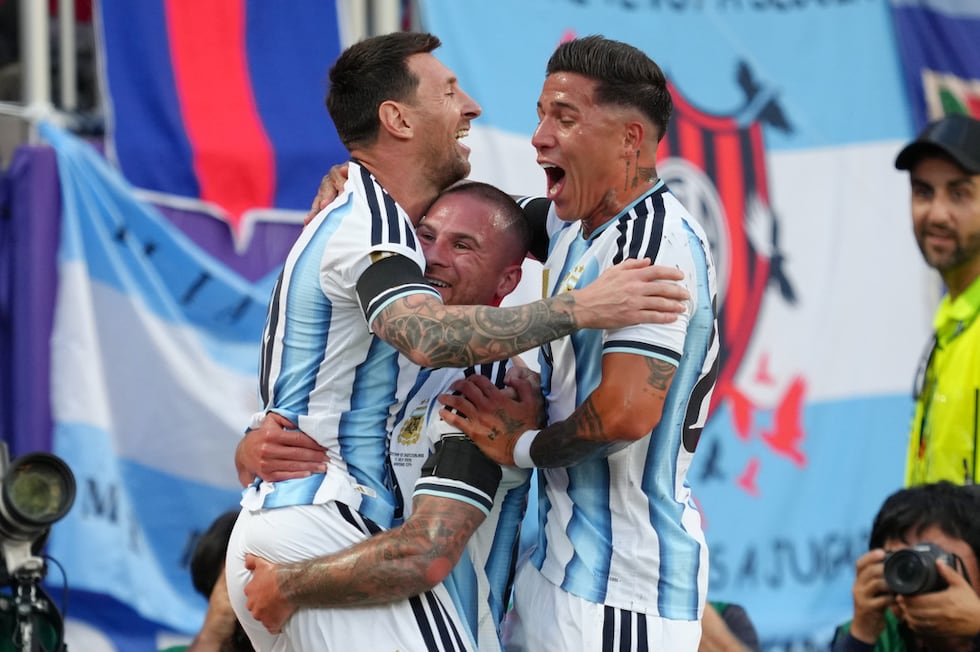
Kansas City’s four adopted teams set up base camps in KCK and Lawrence, Kansas; as well as Riverside, and Kansas City, Missouri. Connected with various areas of the region, all four of them advanced to the knockout stages and two of them -- Argentina and England -- eventually met in a World Cup semifinal in Atlanta, with their summer hosts watching in anticipation as another late goal sent the defending champs back to the championship match.
On a mid-July Sunday in the greater New York area, Argentina came up just short, falling in extra time 1-0 to Spain in the World Cup final. Messi and Argentina’s bid to become the first World Cup champions to repeat in 64 years was unsuccessful.
Still, Kansas City’s finest guests made an imprint down to the tournament’s final minute.
For four years, Kansas City prepared for its World Cup moment. For 26 days in 2026, the heart of the world’s game found its home in the heart of America.
A city normally burning brightly with its Chiefs red changed colors like a chameleon, burning Dutch orange, Ecuadorian yellow, Algerian green and Argentine sky blue for each occasion.
Kansas City stepped beyond its daily routines and familiar comforts this summer to discover people and passions from cultures as distinct and as vibrant as our own.
Kansas City opened its streets and found room for the world.
Kansas City opened its tables and found more in common than anyone could have imagined.
For 26 days, Kansas City wasn’t just a host. It was a meeting place, a spotlight for the beautiful game and a home away from home.
Though the glow of the World Cup has dimmed, the message shines as clearly as ever. When the world shows up, Kansas City’s people show out.
Kansas City was, and is, truly unmatched.
Copyright 2026 KCTV. All rights reserved.