Shawnee Mission parents push school board to reduce classroom screen time
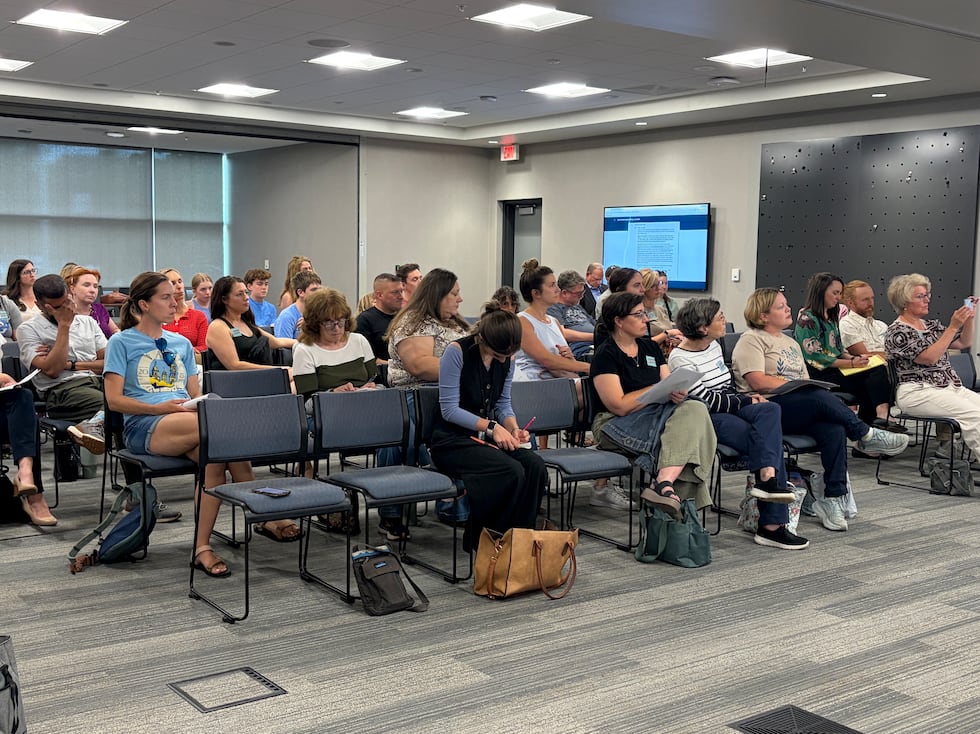
OVERLAND PARK, Kan. — More than two dozen Shawnee Mission School District parents showed up to a recent school board meeting with a clear message: their kids are spending too much time on individual screens at school — and they want it to stop.
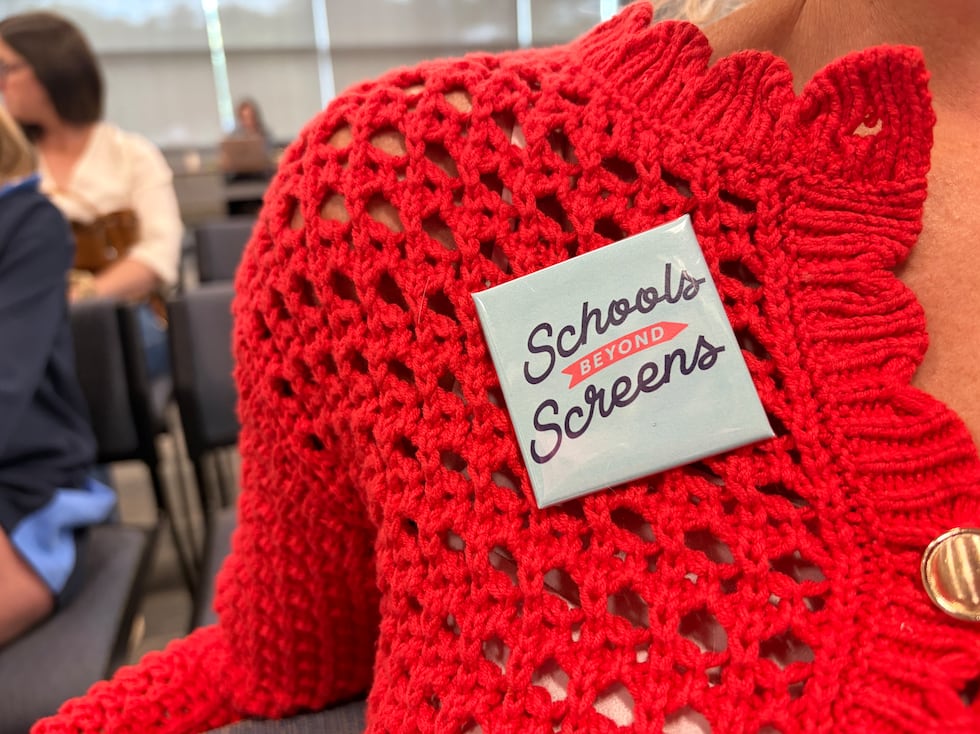
The parents came wearing buttons for Schools Beyond Screens, a national coalition that began in Los Angeles last year and has since grown to chapters in 27 states. The group advocates for evidence-based guidelines around technology in the classroom.
What parents are asking for
The local Schools Beyond Screens chapter said it surveyed 112 SMSD parents and heard from families across every feeder pattern. According to the group, three demands rose to the top:
- 91% of respondents want student access to YouTube, gaming, video streaming, and social media blocked on school devices. The district’s instructional technology webpage indicates it already blocks major streaming services and social media platforms, and YouTube for PreK through 6th grade.
- 87% of respondents want dedicated computer skills and digital citizenship classes — covering typing, basic software use, online safety, and etiquette.
- 79% of respondents want no individual devices used by students in pre-K through 2nd grade.
- 40% of respondents said they have considered — or already made — a switch to a different school district over device use concerns.
What parents said at the meeting
Several parents addressed the board directly, sharing personal experiences and research.
Rebecca Ferguson, a pulmonary and critical care physician and SMSD parent, said she joined Schools Beyond Screens after her fourth grader came home complaining that her eyes hurt from too much iPad use. Her youngest was excited to get a tablet, but the gamification of learning also concerned Ferguson.
“My first grader loved the iPad because she got to come home and tell me all about the games she was doing the little emojis that popped up everywhere,” Ferguson said.
Ryan Van Pelt, a Prairie Village parent and attorney, said he was surprised when his daughter received an iPad on her first day of kindergarten. The family has made a point of not allowing tablets or phones for their young children. He emphasized a distinction he worried administrators are missing: teaching kids how to use technology is not the same as using technology to teach everything else.
“I’m concerned that learning digital skills can be conflated with learning all skills digitally,” Van Pelt said. “If the purpose of the technological instruction is to teach how to use technology itself, I’m fully on board. If, however, the technology is the teaching mechanism for elementary subjects, then we, as parents, deserve to see how such technology use has been proven beneficial beyond other traditional methods.”
He also called on the district to make an affirmative case that screen use is beneficial before introducing devices, rather than starting from an assumption of use.
“We expected social pressures for devices from peers, other family, and popular culture,” Van Pelt said, “but we really didn’t expect one of our primary challenges would be at school.”
Amanda Davison, a writer and former college instructor who recently unenrolled her daughter from Brookridge Elementary over the issue, drew on her years in higher education. Her voice cracked as she talked about college students becoming increasingly lonely and isolated.
“I do not want my kindergartner on a tablet. I do not want her sitting in a room full of kindergartners sitting on tablets,” Davison said.
Sush Govindan, a physician who has led national rollouts of AI and digital technology, said he supports technology — but not without a clear strategy.
“Why are we doing it? What’s the point?” Govindan said. “I look at your documents and I see a very vague posture — not thoughtful, really, at all.”
Diana Dewey, who founded the local Schools Beyond Screens chapter and also substitutes in the district and coaches a robotics team, acknowledged steps the district has already taken — including the purchase of iPad storage carts for elementary schools — before framing the group’s broader message as collaborative, not combative.
“We are here to support your efforts to rebalance ed tech use,” Dewey said. “We are not coming to you as parents that are looking to leave. We are coming to you in the hope that we can work with you to create a better future for our children.”
A board member asked parents who spoke publicly to email their comments and research to the full board. KCTV5 also observed Schumacher speaking one-on-one with parents before the regular agenda began.
What the district says
According to the district’s instructional technology web page, every elementary student in Shawnee Mission is issued an iPad; secondary students receive a MacBook Air. But Superintendent Dr. Michael Schumacher says the district is actively adjusting how those devices are used — and he wants parents to know they’re being heard.
At the June 8 board meeting, Schumacher announced several concrete changes for elementary schools taking effect next school year:
- iPad carts will serve as docking stations in every elementary classroom. When technology isn’t being used for instruction, iPads go back in the cart — not on student desks.
- No non-instructional use of devices. iPads will not be used as a reward or for indoor recess.
- iPads will not be sent home as standard practice. Teachers may send them home only when there is a specific instructional purpose — and families will be notified when that happens.
“We are listening,” Schumacher said. “We recognize that this is something that we need to address.”
He also echoed the distinction Van Pelt raised about technology as a subject versus technology as a teaching tool.
“Just because you can use technology,” Schumacher said, “doesn’t mean that you should.”
The district’s own Developmental Guide for the Use of District-Provided Technology — updated in January 2026 — reinforces that position. It acknowledges that “current research finds that minimal use of technology benefits the cognitive, academic, and social emotional development of all students,” and outlines specific grade-level screen time limits:
- Pre-K: “Intentional and limited” tech exposure; face-to-face interactions and play-based learning should take priority
- K–2: Breaks encouraged after just 10 minutes of screen use; physical books and handwriting prioritized over devices
- Grades 3–6 and above: Breaks encouraged after 10–20 minutes; screen time should complement, not replace, traditional learning
The debate over school-issued devices is playing out against a broader backdrop. In March, Kansas Governor Laura Kelly signed a bell-to-bell ban on personal electronic devices in public schools, taking effect this fall. That law, however, does not apply to devices issued by school districts — meaning SMSD’s iPads and MacBooks are not affected. Schumacher made clear he wants to keep it that way, saying the district can address the issue on its own terms without legislative intervention.
Copyright 2026 KCTV. All rights reserved.